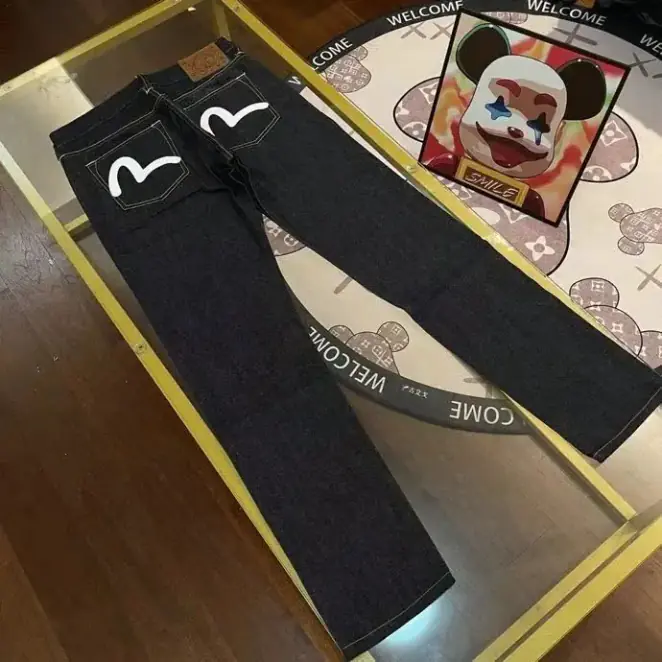
Evisu Seagull Denim Jeans
Bottoms weidian · recorded 300–650 g · sizes Waist 30–38 · checked 2026-10-06
joyagoo.mobi is an independent record. Links to Kakobuy carry a source tag so the click can be counted (marked joyagoo.mobi) — it does not change what we list. How links work.
Weight band and sizing
| Recorded weight band | 300–650 g |
|---|---|
| Size range seen | Waist 30–38 |
| Source platform | weidian |
| Category | Bottoms |
Band recorded by us across the samples listed in the method page; treat anything outside it as Not verified.
Three QC positions for this category
- Waistband button and eyelet reinforcement
- Inseam measurement against the size chart
- Knee and seat seam stress points
The full reading protocol is on the QC scorecard, which scores these same five positions as pass, ask or return.
What the record says
Before consolidation, Evisu Seagull Denim Jeans is weighed, measured and compared against the same three criteria.
Bench figures start with the unit mass: 300–650 g, estimated from the Bottoms category and not measured on a bench. Size coverage runs Waist 30–38, and the three dimensions to write down are waist relaxed and stretched, inseam from crotch seam to hem, and front rise. Recorded for this entry: the size ladder Waist 30–38 spans 7 separate sizes; the listing traces to Weidian item 7630064606 and carries this record's own reference 1197919178.
Three points carry the reading. First, waistband button and eyelet reinforcement — this is where a Bottoms entry most often shows its hand, and it is read from above with the pair flat. Second, inseam measurement against the size chart, read against the confirmed size on the entry while the bag label is ignored. Third, knee and seat seam stress points, shot close enough that the finish, rather than the overall shape, fills the frame. The three readings are taken in one pass, and a miss on any of them stops the entry until it is looked at again.
Freight behaves predictably here: denim and heavy fleece add mass quickly, so two pairs can change the chargeable figure. The bench sequence is the garment flat, then folded as it would be packed. Denim pairs stack well but do not compress; plan the carton around the folded footprint rather than the mass. Measure the waistband both relaxed and pulled flat: the difference between the two figures is the real comfort allowance.
Production drift is expected rather than exceptional. Fabric weight, wash treatment and elastic recovery in the waistband all move between runs of the same style number. Read the entry against the three points above and treat the rest as commentary.