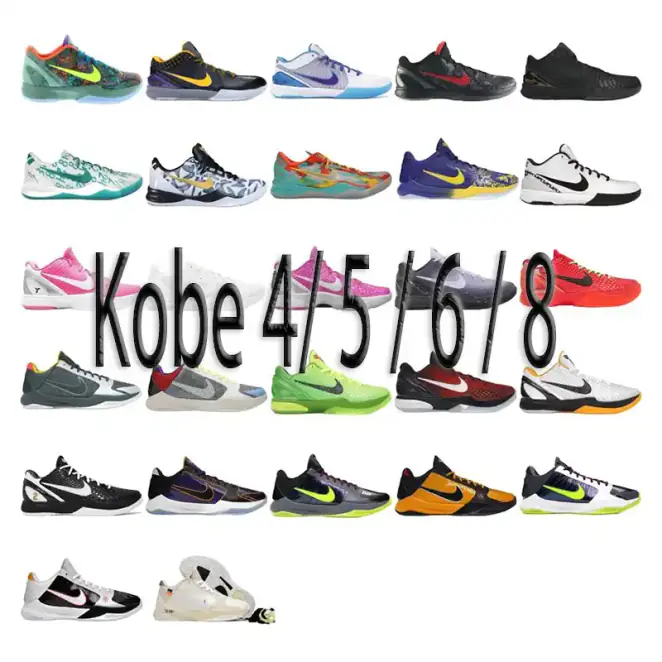
Nike Kobe 4/5/6/8 Basketball Sneakers
Footwear weidian · recorded 700–1,100 g · sizes EU 36–45 · checked 2026-10-06
joyagoo.mobi is an independent record. Links to Kakobuy carry a source tag so the click can be counted (marked joyagoo.mobi) — it does not change what we list. How links work.
Weight band and sizing
| Recorded weight band | 700–1,100 g |
|---|---|
| Size range seen | EU 36–45 |
| Source platform | weidian |
| Category | Footwear |
Band recorded by us across the samples listed in the method page; treat anything outside it as Not verified.
Three QC positions for this category
- Sole glue line along the midsole
- Size tag inside the heel vs the ordered EU size
- Stitching density at the toe box
The full reading protocol is on the QC scorecard, which scores these same five positions as pass, ask or return.
What the record says
Handling notes for Nike Kobe 4/5/6/8 Basketball Sneakers begin at the weighing bench, not at the parcel tape.
Bench figures start with the unit mass: 700–1,100 g, estimated from the Footwear category and not measured on a bench. Size coverage runs EU 36–45, and the three dimensions to write down are insole length, outsole width and stack height. Recorded alongside the measurements: the listing traces to Weidian item 7623761473 and carries this record's own reference 0272533824.
Three points carry the reading. First, sole glue line along the midsole — this is where a Footwear entry most often shows its hand, and it is read from above with the pair flat. Second, size tag inside the heel vs the ordered EU size, read against the confirmed size on the entry while the bag label is ignored. Third, stitching density at the toe box, lit from a low angle so that flat spots and lifted edges separate from the surface. The three readings are taken in one pass, and a miss on any of them stops the entry until it is looked at again.
Volumetric behaviour follows from the material: the original shoebox decides the volumetric side of the freight calculation far more than the foam does. On the scale the sequence runs one shoe, then both together, then the carton. Two pairs from the same entry consolidate cleanly into one carton; a third usually pushes the parcel into the next freight band. Heel counter stiffness is the single best proxy for whether a pair will keep its shape after a fortnight of wear.
Batch variance is the part no record removes. Lasting, adhesive cure and leather or knit batch all move between production runs, so two pairs of the same entry rarely read identically. That is why the three points above were chosen: each one survives a change of production run and still tells you something on arrival.